



Best Ways to Reduce Steel Purchasing Costs
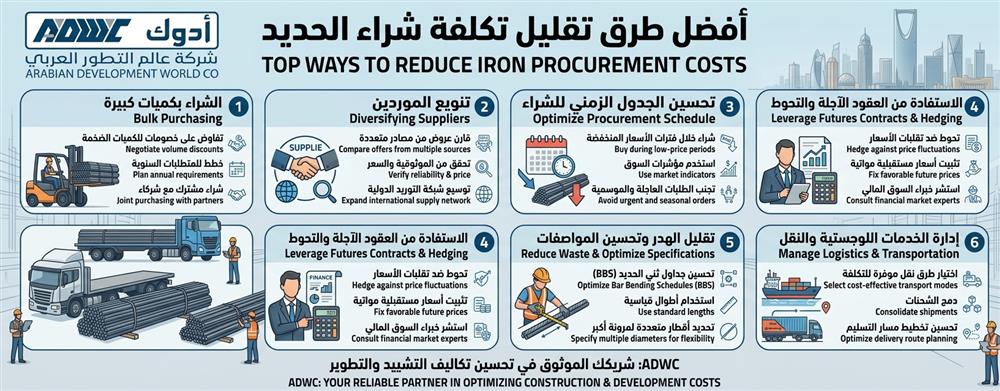
Best Ways to Reduce Steel Purchasing Costs
Steel is one of the major cost components in construction projects, whether for contractors, project owners, or individuals. Purchasing the right quantities at the right price can help reduce overall project costs without compromising material quality or project requirements.
This article explains practical ways to reduce steel purchasing costs and make better use of the project budget.
1. Determine the Required Steel Quantity Accurately
One of the most effective ways to reduce steel purchasing costs is to determine the required quantity before placing an order.
Purchasing more steel than needed can tie up capital and create unnecessary storage costs, while purchasing too little may result in additional orders and repeated delivery expenses.
It is therefore recommended to use approved drawings and quantity estimates prepared by the engineer or consulting office to determine the actual project requirements.
2. Compare Steel Prices Before Purchasing
Steel prices can change over time due to various market factors. Therefore, it is recommended to obtain quotations from several suppliers before making a purchasing decision.
When comparing quotations, do not consider the price per ton alone. Compare the steel grade and type, required sizes and diameters, quantity, delivery costs, lead time, payment terms, product quality, and source.
This approach helps identify the best overall value rather than simply the lowest price.
3. Purchase the Right Quantity for the Project
Purchasing appropriate quantities can help achieve better prices, especially for projects requiring large amounts of steel.
It is also important to plan orders in advance instead of purchasing small quantities repeatedly, while considering actual project requirements and available storage space.
4. Plan Steel Orders in Advance
Last-minute purchasing may increase costs because of urgent delivery requirements or changes in market prices.
A steel procurement schedule should therefore be prepared according to the project's construction phases. This helps ensure that steel arrives when needed without purchasing too early and storing it for unnecessarily long periods.
5. Reduce Steel Waste
Material waste is one of the major factors that can increase steel costs in construction projects.
Waste can be reduced by preparing accurate cutting schedules, making use of suitable leftover lengths, organizing cutting and bending operations, storing steel properly, coordinating between the warehouse and construction site, and monitoring issued and used quantities.
Every reduction in steel waste can contribute to lowering the project's total cost.
6. Select Steel Sizes According to the Structural Design
Steel bar diameters and quantities should not be changed simply to reduce costs without consulting the responsible engineer.
Savings can be achieved through better planning and accurate purchasing of the required sizes, but any changes to reinforcement must comply with the approved structural design and project specifications.
7. Choose a Reliable Steel Supplier
Working with a reliable steel supplier can help reduce indirect purchasing costs.
A reliable supplier can provide clear information about product specifications, quantities, and prices, while helping organize deliveries and reduce the possibility of delays or incorrect quantities.
Steel quality and compliance with specifications should always remain a priority and should not be sacrificed for a lower price.
8. Negotiate Prices for Large Quantities
When purchasing large quantities of steel, it may be possible to negotiate better pricing based on order volume and the delivery schedule.
It is also useful to request a detailed quotation that clearly includes the steel price, transportation costs, and any additional charges so that supplier quotations can be compared accurately.
9. Include Delivery Costs in the Purchase Price
A steel supplier may offer a low price per ton, but high transportation costs can make the final cost more expensive than another supplier's offer.
Therefore, the total delivered cost should be considered rather than focusing only on the steel price per ton.
10. Store Steel Properly to Avoid Losses
Improper storage can expose steel to damage and corrosion, resulting in additional waste and costs.
Steel should be kept above ground level, protected from standing water and excessive moisture, organized according to size and type, and inspected regularly.
11. Monitor Steel Prices and Purchase Timing
Steel prices may change due to market conditions, raw material costs, transportation expenses, and other factors.
Projects with flexible schedules can monitor market prices and plan purchases appropriately. However, project progress should not be unnecessarily delayed while waiting for an uncertain price reduction.
12. Do Not Choose Based on the Lowest Price Alone
The lowest price does not always mean the lowest overall cost.
Low-quality or non-compliant steel can lead to additional problems and expenses. Delivery delays and high transportation costs can also increase the final purchasing cost.
The focus should therefore be on obtaining the best value for money, rather than simply choosing the cheapest steel.
A Simple Formula for Calculating Steel Purchasing Cost
The total steel purchasing cost can be estimated using the following basic formula:
Total Steel Cost = Steel Quantity × Price per Ton + Transportation and Delivery Costs + Additional Costs
For a more accurate project cost, steel waste, storage expenses, and other purchasing-related costs should also be considered.
Quick Tips to Reduce Steel Purchasing Costs
Determine quantities accurately before purchasing.
Compare quotations from several suppliers.
Purchase quantities according to project phases.
Negotiate prices for large orders.
Include transportation in the total cost.
Reduce cutting and bending waste.
Store steel properly.
Choose a reliable supplier.
Monitor market prices.
Never compromise quality or required specifications for a lower price.
Conclusion
Steel purchasing costs can be reduced through proper planning, accurate quantity estimation, quotation comparison, waste reduction, supplier selection, and careful consideration of transportation and storage costs.
The best approach is to seek the best value for money while maintaining the required technical specifications. Reducing costs does not necessarily mean buying the cheapest steel; it means managing the entire purchasing process efficiently.
.png)
- السجل التجاري : 1010298801
- الرقم الضريبي : 300438467100003